CPU architecture 32-bit vs 64-bit

CPU architecture 32-bit vs 64-bit ALU and register block diagram
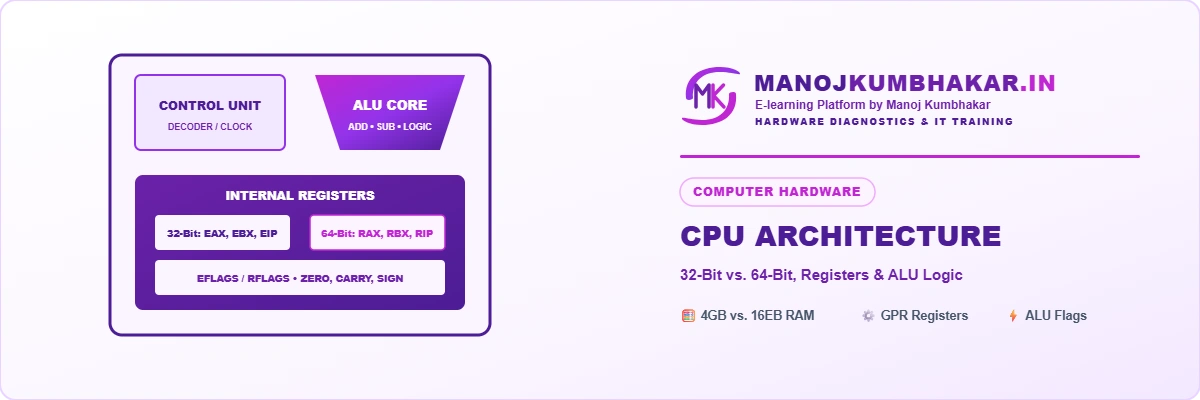
Analyzing modern CPU architecture 32-bit vs 64-bit forms the foundation for understanding instruction pipelines, internal register bit-widths, and linear physical memory addressing. At the heart of computer systems, the Central Processing Unit (CPU) executes code by retrieving machine instructions, loading data into high-speed local registers, and running calculations through the Arithmetic Logic Unit (ALU). Whether … Read more
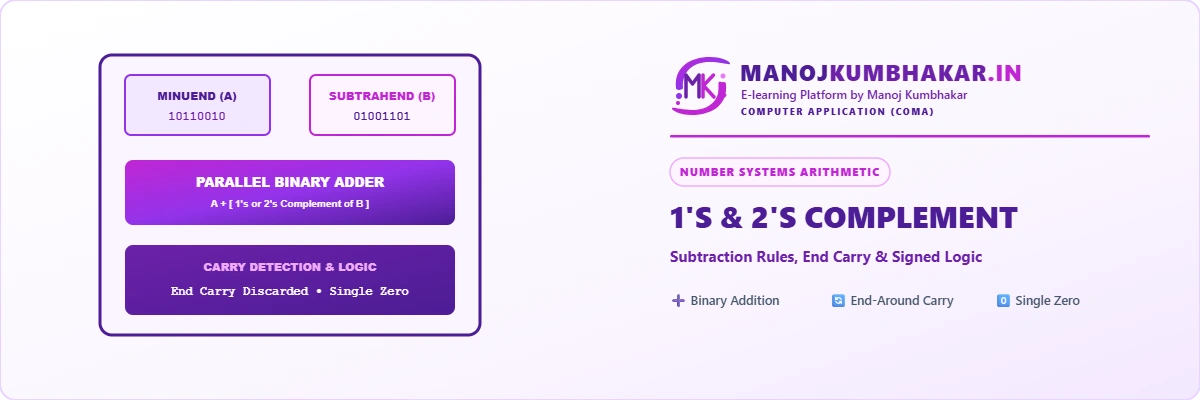
Number Systems Arithmetic: 1’s and 2’s Complement Subtraction 

1s and 2s complement subtraction binary adder logic diagram

Mastering 1s and 2s complement subtraction is an indispensable requirement for higher secondary computer application students, university candidates, and digital electronics engineers. In hardware systems, Arithmetic Logic Units (ALUs) do not feature separate circuitry for subtraction; instead, subtraction is performed by adding the complemented subtrahend to the minuend using standard binary adder circuits. Building directly … Read more

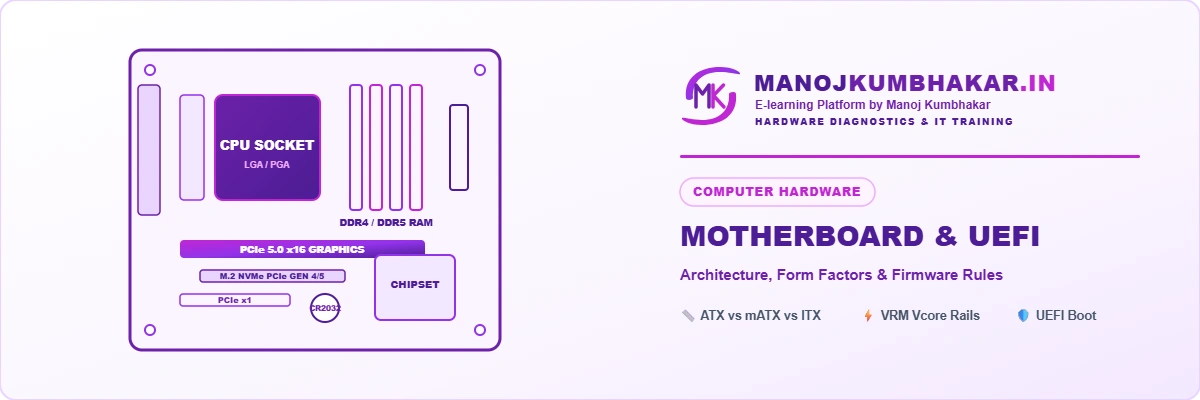
Motherboard Architecture and Form Factors Diagnostic Diagram

motherboard architecture and form factors diagnostic block diagram

Mastering motherboard architecture and form factors is the foundational skill required for modern computer hardware engineering, system building, and diagnostic bench repair. As the central printed circuit board (PCB) inside every workstation, the motherboard connects processor execution pipelines to memory channels, storage interfaces, and power delivery rails. Whether you are testing rail voltages with our … Read more

TOP 10 Advantages and Disadvantages of Computers

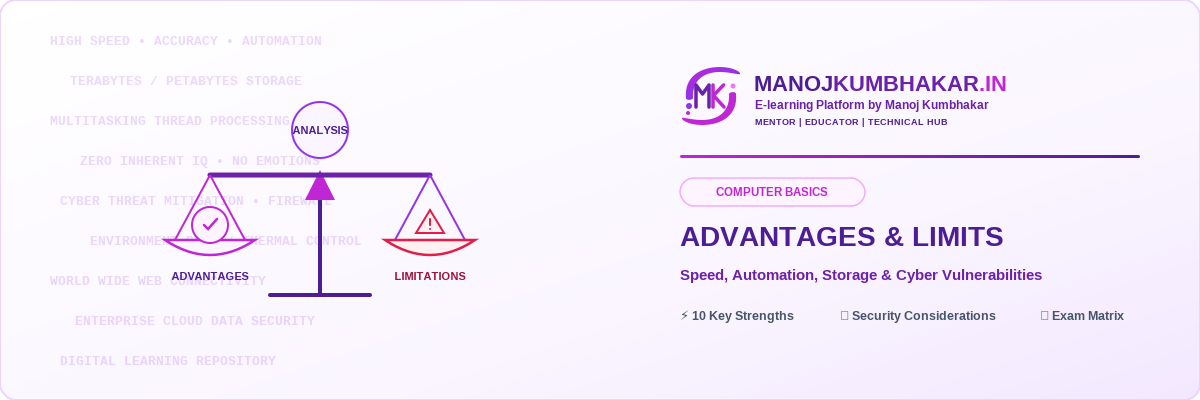
The computer is a programmable device with a lot of instructions to complete a specific job and generate results instantly. The computer is an electronic machine that can resolve difficult and different problems, process the input data, store the data for future uses, and perform calculations faster and more accurately as compared to humans. The … Read more

Computer Basics and Fundamentals

Computer Basics and Fundamentals

Home » Computer Basic » Computer Basics and Fundamentals Mastering computer basics and fundamentals is the critical first milestone for school students, higher secondary board examinees, and entry-level IT professionals. A solid understanding of computational principles explains how electronic microprocessors process unorganized data into structured information. This comprehensive tutorial covers essential concepts including the Input-Process-Output … Read more

Classification of Computers

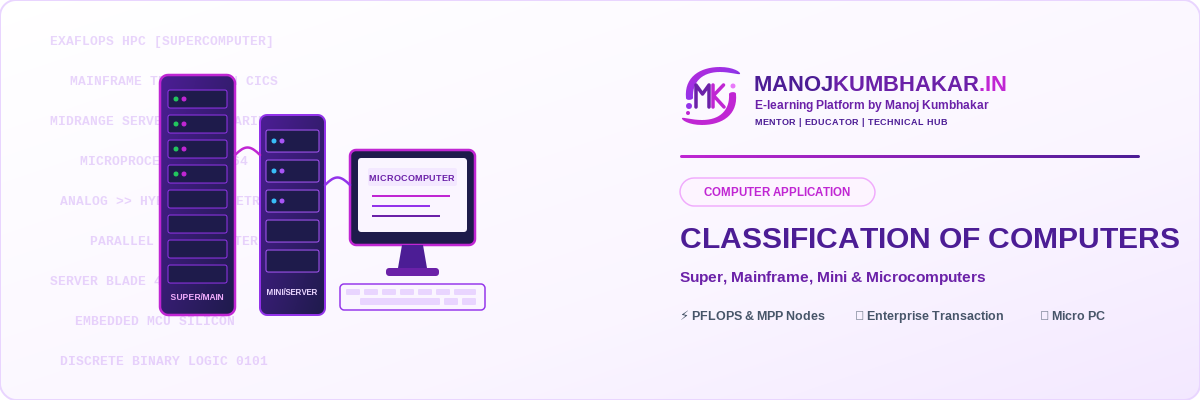
Home » Computer Basic » Classification of Computers Understanding the classification of computers is a fundamental requirement in computer science education, higher secondary board curricula, and vocational information technology training. Modern computational engines have evolved far beyond basic counting devices into multi-tiered electronic architectures. Today, the classification of computers is evaluated across three primary dimensions: … Read more

Storage Devices and Memory Architecture

Storage Devices and Memory Architecture

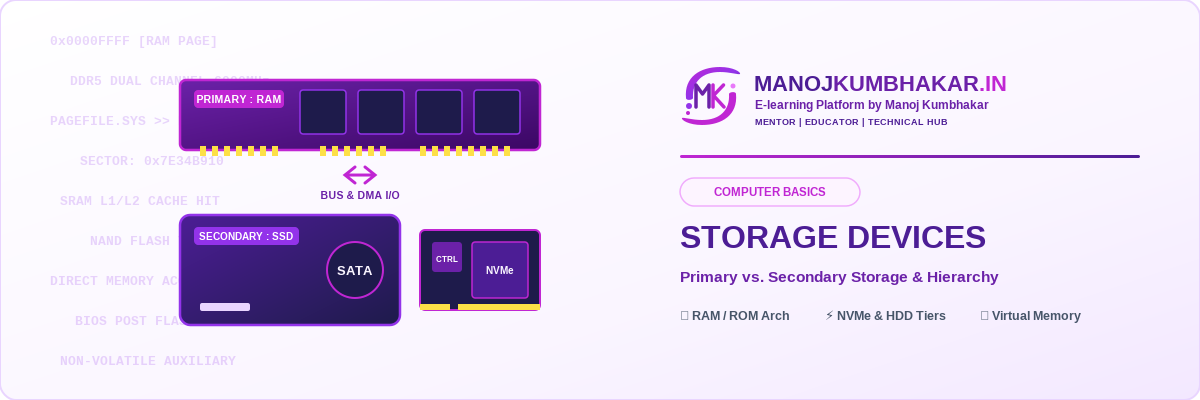
Home » Computer Basic » Storage Devices and Memory Architecture In modern digital computing, understanding storage devices and memory architecture is fundamental for computer students, hardware technicians, and board examinees alike. While microprocessors execute computations, they depend directly on accessible memory channels to retrieve operands, decode instructions, and write output results. Memory subsystems are organized … Read more

Number System Conversions

Number System Conversions

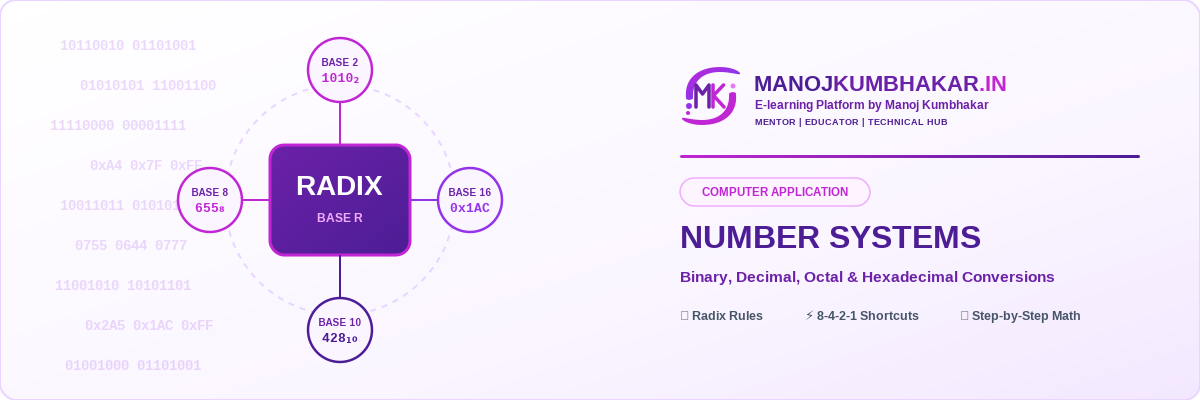
Home » Computer Basic » Number System Conversions Mastering number system conversions is the foundational mathematical requirement in computer science, digital electronics, and higher secondary computer curricula. While human civilization communicates numerical values through base-10 representations, microprocessors operate through binary logic gates governed by high and low voltage states. Bridging the gap between human reasoning … Read more

SMPS Operation and Pinout Diagnostics

SMPS Operation and Pinout Diagnostics

Home » Computer Hardware » SMPS Operation and Pinout Diagnostics In professional desktop hardware engineering, mastering SMPS operation and pinout diagnostics is an essential skill for IT technicians, hardware engineers, and vocational students. An operating system cannot initialize, hardware buses cannot coordinate data, and microprocessors cannot execute instructions without pure, ripple-free direct current (DC). While … Read more

Computer Basics Architecture

Computer Basics Architecture, CPU & Memory Hierarchy Guide

Home » Computer Basic » Computer Basics Architecture Understanding computer basics architecture is an essential requirement for school students, higher secondary board candidates, and aspiring IT systems administrators. Every modern digital device—from desktop computer units to enterprise virtualization servers—operates according to unified engineering guidelines. Studying computer basics architecture helps examinees understand how raw electrical currents … Read more